
by Sarah Bender
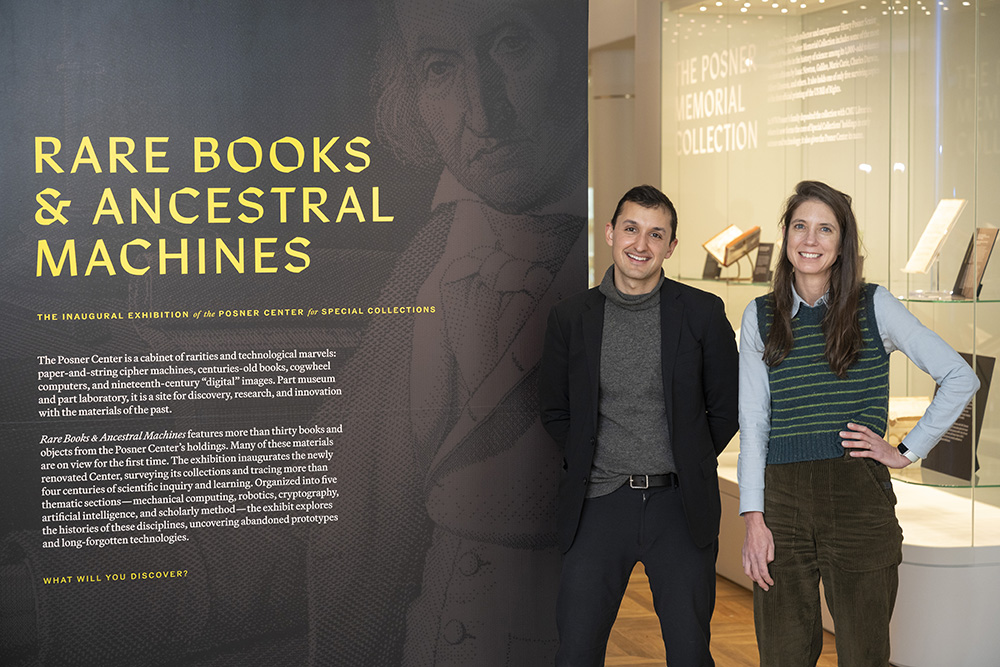
Carnegie Mellon University Libraries opened the doors of the newly-renovated Posner Center for Special Collections on December 2 with its inaugural exhibition “Rare Books & Ancestral Machines.”
Part museum and part laboratory for the humanities, the Posner Center is CMU’s destination for discovery, research, and hands-on engagement with the past. Thanks to an $8 million commitment from the Posner Foundation of Pittsburgh, the Libraries recently transformed the building into a dedicated library for CMU’s Special Collections, updating and expanding the space to better engage both the CMU and wider Pittsburgh communities.
A public exhibition gallery with museum-quality display cases and adaptive lighting is central to the redesigned 11,400-square-foot facility, which also includes a silent reading room for researchers, a classroom and flex space for instruction and events, and additional workspaces for both students and staff. The renovated Posner Center, designed by Perkins Eastman architects, additionally includes a new home for the Libraries’ Digitization lab equipped with a state-of-the-art DT BC100 scanner and secure expanded storage.
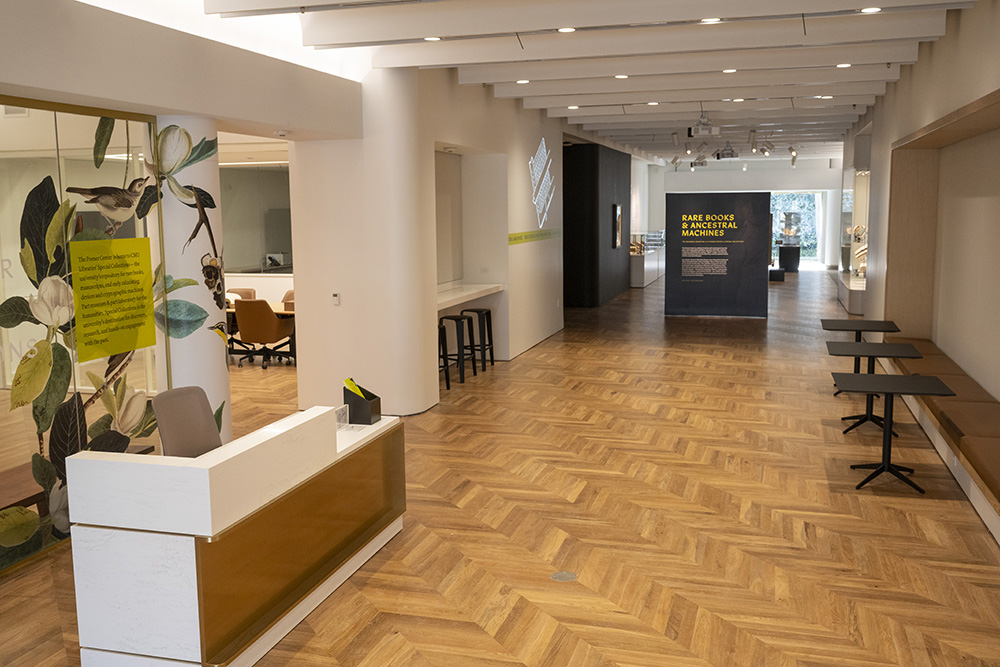
“The renovated Posner Center expands the possibilities of what the Libraries can offer our community,” said Helen and Henry Posner, Jr. Dean of the University Libraries Keith Webster. “It’s not only a space for preservation, but a vibrant laboratory for the humanities where students, scholars, and the public can encounter ideas firsthand. By connecting our history to our future, we are creating an environment where the origins of scientific inquiry can directly inspire modern innovation.”
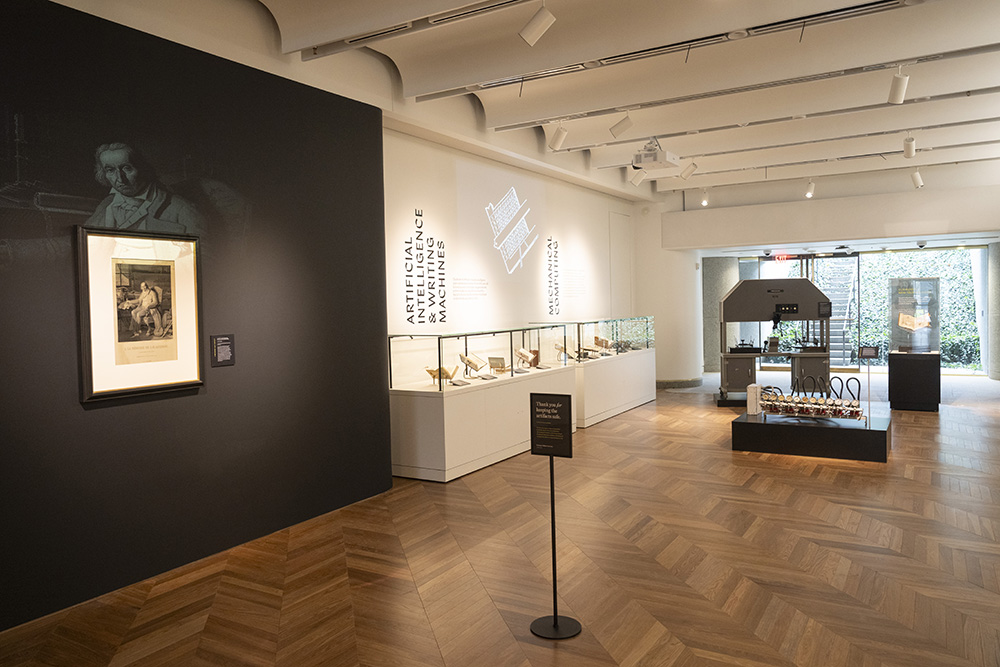
“Rare Books & Ancestral Machines” features more than thirty books and objects from the Posner Center’s holdings, many on view for the first time. It surveys the Posner Center’s collections and traces more than four centuries of scientific inquiry and learning. Organized into five thematic sections — mechanical computing, robotics, cryptography, artificial intelligence, and scholarly method — the exhibit explores the histories of these disciplines, uncovering abandoned prototypes and long-forgotten technologies.
Science and Technology Through the Ages
Curator of Special Collections Sam Lemley carefully chose objects to feature in the exhibition that would introduce visitors to the breadth and depth of the collections.
The strength of CMU’s Special Collections lies in its extensive documentation of the history of science and technology, including mechanical, symbolic, and digital computing. “Rare Books & Ancestral Machines” showcases that focus, showcasing that distinct focus for audiences entering the refreshed space for the first time.
“The exhibit, and the collection more broadly, reflect the disciplinary range and innovative culture of CMU,” Lemley said. “It’s not only an embodiment of the groundbreaking work that happens every day at the university, it also offers an accessible and exciting glimpse into what makes CMU’s Special Collections world class. Visitors will leave with a clear idea of what makes the Posner Center distinctive. But I hope they’ll also feel invited to participate in the process of discovery that the collection inspires and demands.”
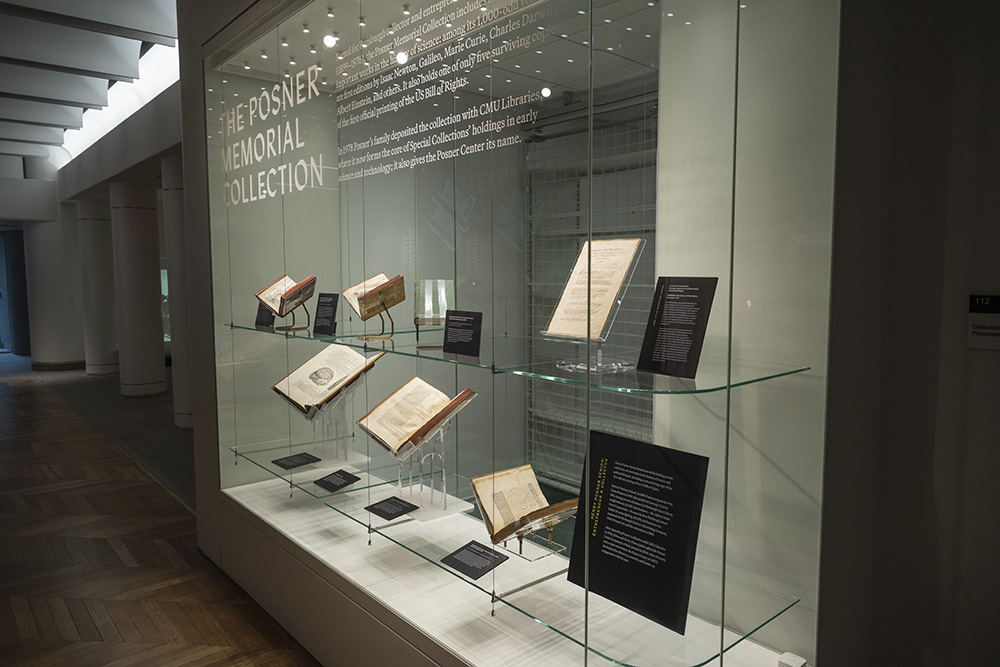
Many of the objects on view are drawn from the Posner Memorial Collection, collected by Pittsburgh entrepreneur Henry Posner Senior and deposited with CMU Libraries in 1976. The Posner Memorial Collection includes some of the most important works in the history of science: among its 1,000-odd volumes are first editions by Isaac Newton, Galileo, Marie Curie, Charles Darwin, Albert Einstein, and others.
The exhibition showcases Copernicus’ 1543 “On the Revolutions of the Heavenly Spheres,” the first work to demonstrate heliocentric (sun-centered) planetary motion, and Andreas Vesalius’ “De humani corporis fabrica,” which transformed medical theory upon its publication that same year. Viewers can see the origins of the scientific method laid out in “Discours de la méthode” (1637) by René Descartes, and explore the work of Arab mathematician and scientist Hasan Ibn al-Haytham in his “Book of Optics” (1572).
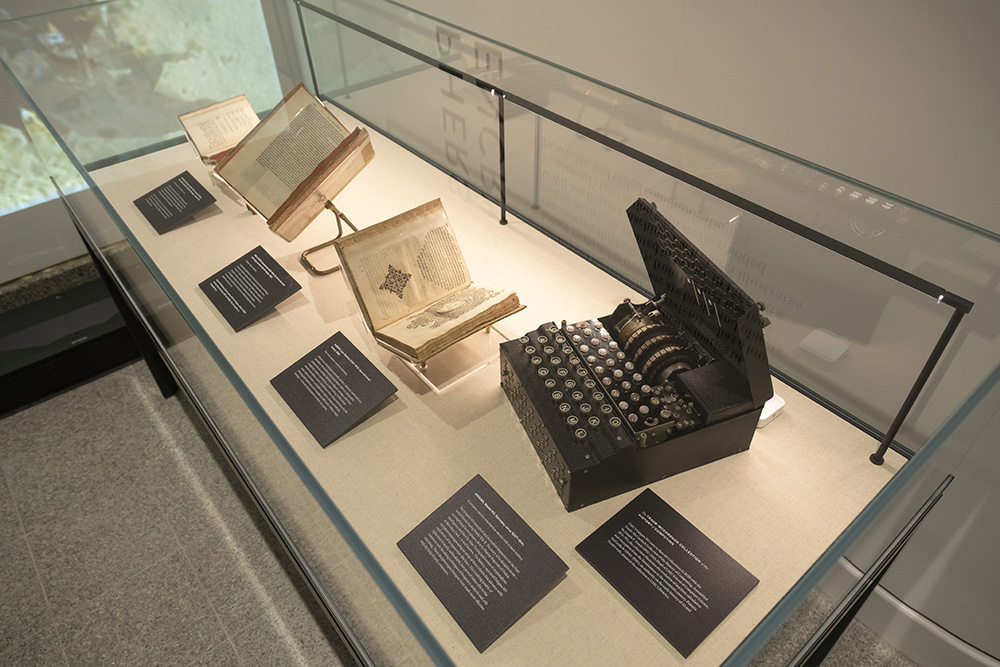
Other themes are highlighted throughout the rest of the exhibition. The first western treatise on ciphers, printed in Venice in 1568, and a WWII-era Enigma machine trace the history of cryptography.
“De gli automati, ouero machine se mouenti” (On Automata, or Machines that Move Themselves), the first printed book on robots and automata printed in 1589, and pieces of the “walking robot” created by Turing award-winner Ivan Sutherland at CMU in 1983 demonstrate the prehistory and history of the field of robotics. This part of the exhibition also includes a treatise on mechanical automata printed in nineteenth-century Japan, expanding beyond the western concept of robotics and showing that the history of robotics and programmable machines crosses cultures and centuries.
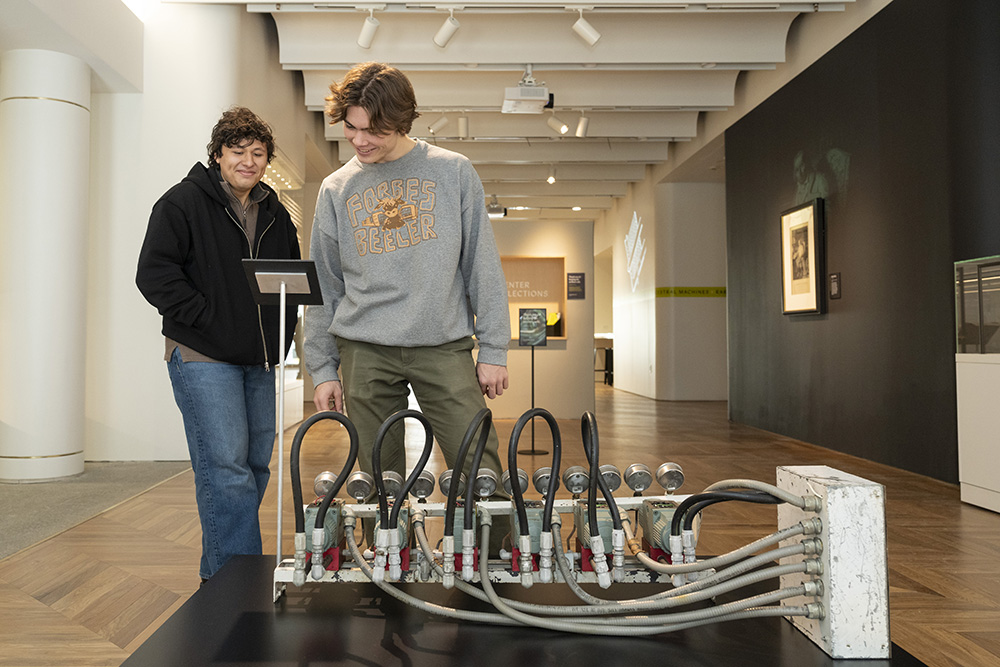
Copies of fictional stories like Jonathan Swift’s “Gulliver’s Travels” and Mary Shelley’s “Frankenstein” imagine a text-generating machine centuries before ChatGPT and examine anxieties about artificial life and sentience that still linger. “Computing Machinery and Intelligence,” by Alan Turing, introduced the concept of heuristics, or “learning machines”, to early AI in 1950.
Finally, the exhibition showcases the centuries-long evolution of mechanical computing, from early instruments that looked more like clockwork than transistor computers, paper-and-string counting devices, and calculators of carved and figured wood alongside the books that heralded their invention. Among the oldest devices on view are Napier’s rods — carved rods that reduced complex mathematical operations to rudimentary arithmetic.
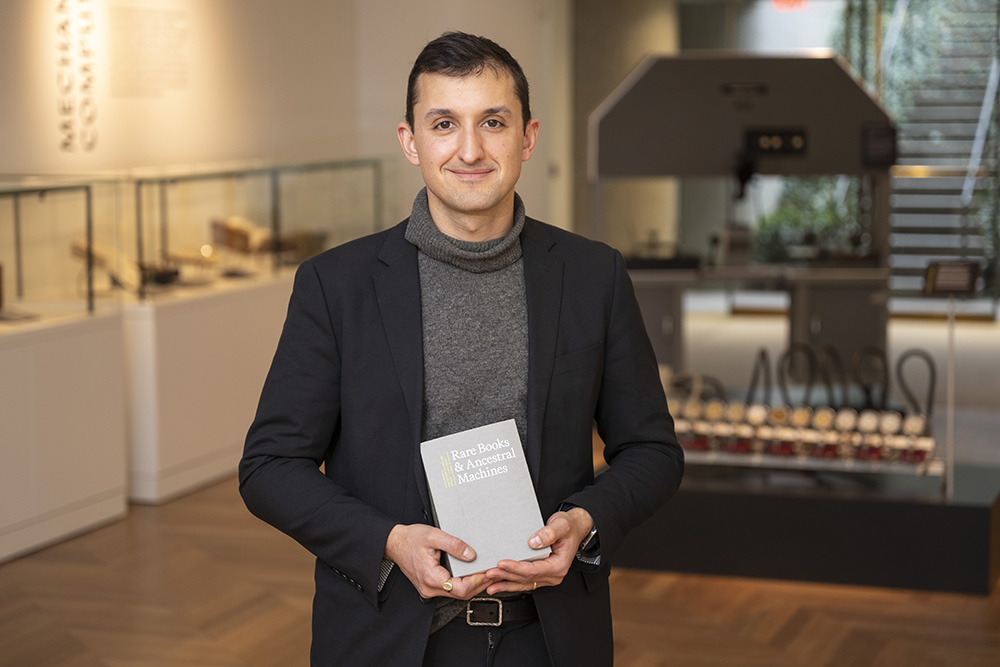
The exhibition coincides with the publication of “Rare Books & Ancestral Machines: A Handbook to the Posner Center for Special Collections,” an illustrated guide to the Posner Center and its themes available in December through Carnegie Mellon University Press.
Like the exhibition, the handbook presents a broad and richly illustrated survey of the collection, alongside interpretive essays. It offers an accessible way for both scholars and general readers to explore the themes of the exhibition.
“The handbook is just that,” said Lemley. “It’s a portable guide to the collection — a partial listing in 100 objects and eight shortform essays that provides a window into the Posner Center’s holdings. Every object in the collection has a story. The book shares some of these and prompts readers and visitors to explore further.”
Engaging with Collections Firsthand
The exhibition launch also signals the start of regular public open hours at the Posner Center.
“There's nothing quite like seeing these materials up close,” said Special Collections Coordinator Catherine Blauvelt. “Our goal is to create a welcoming space where everyone — students, researchers, and community members — can handle rare books, explore early technologies, and learn through direct, tactile experience. The Posner Center was designed for discovery, and open hours make that possible.”
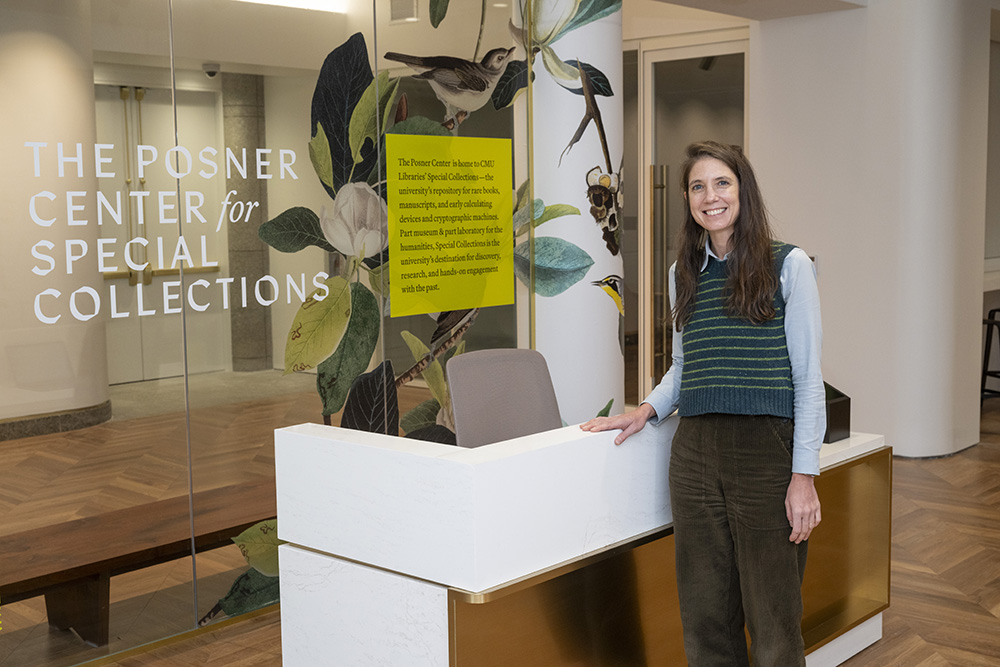
In addition to viewing the exhibition, visitors can make an appointment to handle rare books in the reading room, stop in to study at the lobby tables, or simply drop by to learn more about the collection and see what sparks their curiosity. Staff, including Blauvelt and a new team of student workers, will be on hand to answer questions and offer assistance.
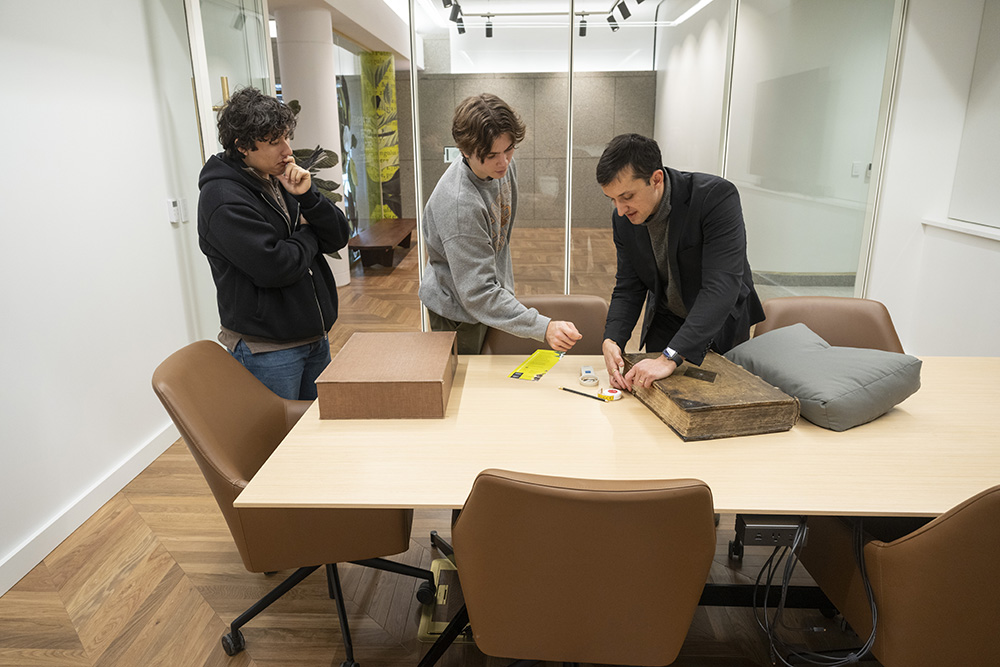
The Posner Center’s reopening will also bring opportunities to explore the collection online, with a 360-degree walk-through and a mobile experience available through Bloomberg Connect debuting in the spring.
A new monthly series of pop-up exhibitions and public programs is yet another opportunity for the community to engage with the collections. Each “Open Stacks” event brings rare books, manuscripts, and early technologies out of the vault and into view, offering a thematically focused look at objects from Special Collections and inviting conversations about the materiality, histories, and futures of science, technology, literature, and the book.
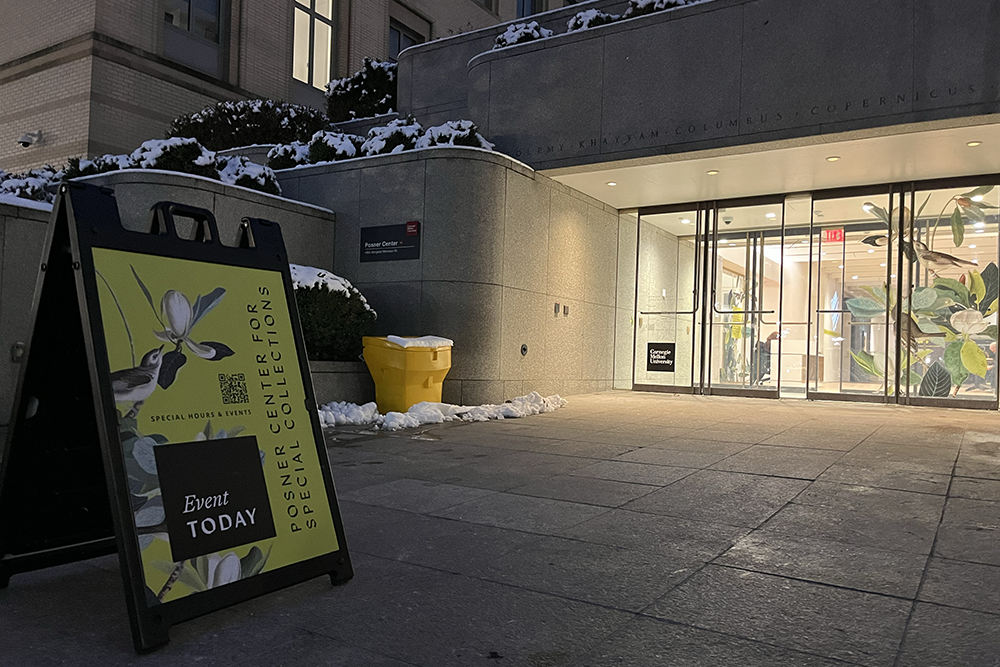
The first “Open Stacks” event, held December 3, highlighted ancestral machines with rare books and artifacts that reveal how humans imagined “machines that move themselves” centuries before modern computing and robotics. Visitors had the opportunity to connect with staff, enjoy snacks, craft a paper automaton, and view the larger exhibition.
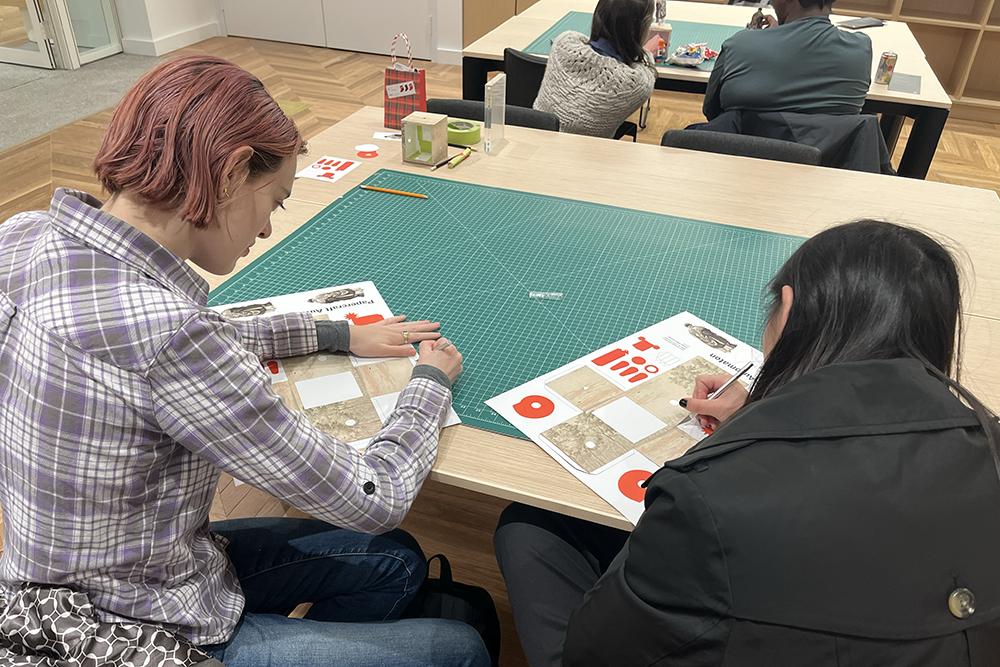
Drop by for the next Open Stacks on January 28, 2026 from 4:30–6:30 p.m. The event will explore the history of codes and codebreaking, showcasing rare works by Giambattista della Porta and Leon Battista Alberti alongside electromechanical devices that shaped modern cryptography. Participants will be invited to create their very own working Renaissance cipher wheel.
The Posner Center for Special Collections is open to visitors Tuesday through Friday from 10 a.m. to 3 p.m., with extended hours from 3–7 p.m. on Thursdays to view the exhibition (the reading room is closed during this time). Community members can also book a research appointment or a class visit by contacting Special Collections. The Posner Center is open by appointment only when classes are not in session.