
Observed each year on Nov. 11, Veterans Day honors those who have served in the United States Armed Forces. Beyond recognizing their service, the occasion invites reflection on the experiences of veterans and the ways military service has shaped individual lives and American society. From the challenges of wartime to the transition back to civilian life, veterans' stories offer perspectives on sacrifice, resilience, and the lasting effects of conflict.
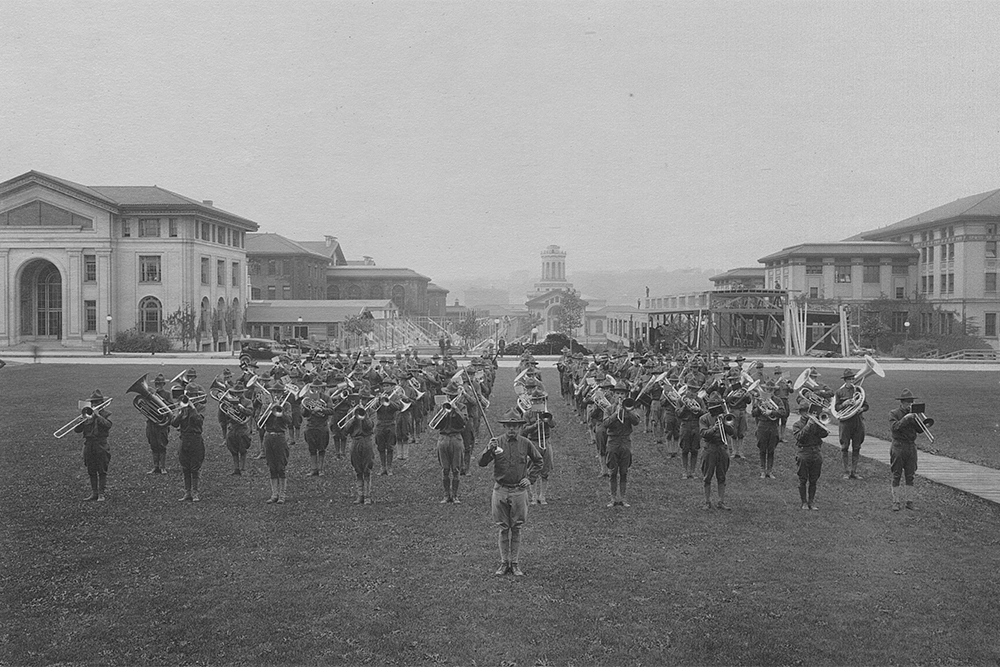
These experiences are also part of Carnegie Mellon's history. The Libraries' exhibition, A Crucible of Change: Carnegie Tech and World War I, explores how Carnegie Tech contributed to the war effort and how that period transformed the campus. Drawing on archival materials, the exhibition highlights the experiences of students and faculty during a pivotal moment in history.
This month's collection brings together works that examine military service through historical accounts and personal narratives. Explore these resources and visit the exhibition in Hunt Library to deepen your understanding of veterans' experiences and consider how their stories continue to inform our understanding of service and its impact on society.
Special thanks to our Materials Processing Coordinator, Leah Zande, for compiling the list.
Main image: The Tooters, 1918. The American Expeditionary Force operated over 200 bands in France with approximately 7500 musicians in total. To help train these musicians Carnegie Tech operated the only Band Musician program outside of the Army’s school at Fort Jay New York. Tech trained two fifty-person bands before the war ended. World War I Records Carnegie Mellon University Archives.
Women Veterans: Lifting the Veil of Invisibility
Harris, G. L. A.; Gonzalez-Prats, M. C.; Sumner, Finn (2018)
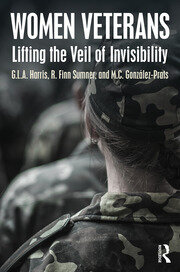 Women who fight in wars also have to fight for their right to do so. But what are the obstacles impeding their progress in achieving equal status as both active service members and as veterans? This book, written by a team of female veterans and military scholars, demonstrates the ways in which women service members and veterans experience a unique set of challenges when attempting to both honorably serve their country and reintegrate into civilian society following military service. These challenges include – but are not limited to – discrimination, staggering rates of suicide, and barriers to obtaining treatment for military sexual trauma and other critical benefits through the U.S. Department of Veterans Affairs.
"Women Veterans: Lifting the Veil of Invisibility" examines current service-related policies and gender in the military’s hierarchical power structure. Here, a confluence of white male privilege and entitlement, the culture of domination, and the effeminization of the enemy manifest themselves as a backlash against women, calling into question a woman’s agency and her very status as a citizen. Special attention in the book is paid to the civil-military divide, representative bureaucracy, and the function of the military and civilian justice systems. Moreover, the need for appropriate healthcare policies and structures is examined within a ‘wicked problems’ framework. The authors conclude that the responsibility for women veterans, and all veterans for that matter, must become a matter of compelling government interest. This ground-breaking book is required reading for practitioners of public policy and administration with an interest in military and veterans affairs, public health, NGOs and activist groups, as well as scholars of gender and public service, public personnel management, and nonprofit management. - Publisher's Description
Request this Title
Service Denied: Marginalized Veterans in Modern American History
Kinder, John; Higgins, Jason (2022)
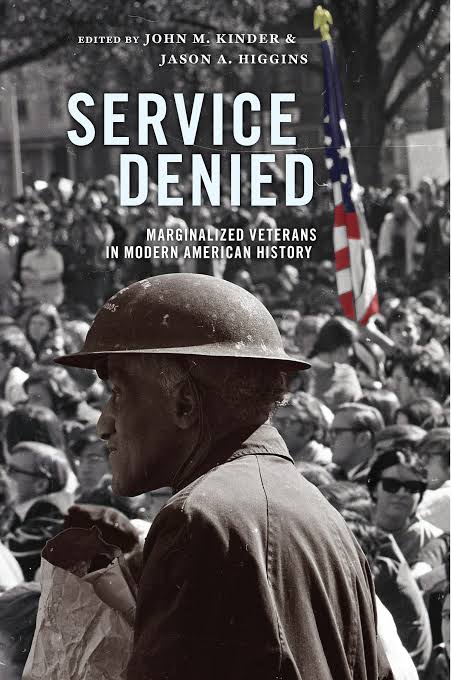 Wartime military service is held up as a marker of civic duty and patriotism, yet the rewards of veteran status have never been equally distributed. Certain groups of military veterans—women, people of color, LGBTQ people, and former service members with stigmatizing conditions, “bad paper” discharges, or criminal records—have been left out of official histories, excised from national consciousness, and denied state recognition and military benefits.
Chronicling the untold stories of marginalized veterans in the twentieth and twenty-first centuries, Service Denied uncovers the generational divides, cultural stigmas, and discriminatory policies that affected veterans during and after their military service. Together, the chapters in this collection recast veterans beyond the archetype, inspiring an innovative model for veterans studies that encourages an intersectional and interdisciplinary analysis of veterans history. In addition to contributions from the volume editors, this collection features scholarship by Barbara Gannon, Robert Jefferson, Evan P. Sullivan, Steven Rosales, Heather Marie Stur, Juan Coronado, Kara Dixon Vuic, John Worsencroft, and David Kieran. - Publisher's Description
Request this Title
Black Civil War Veterans in Washington State
Wilson, Cynthia; Ottoson, Denise (2024)
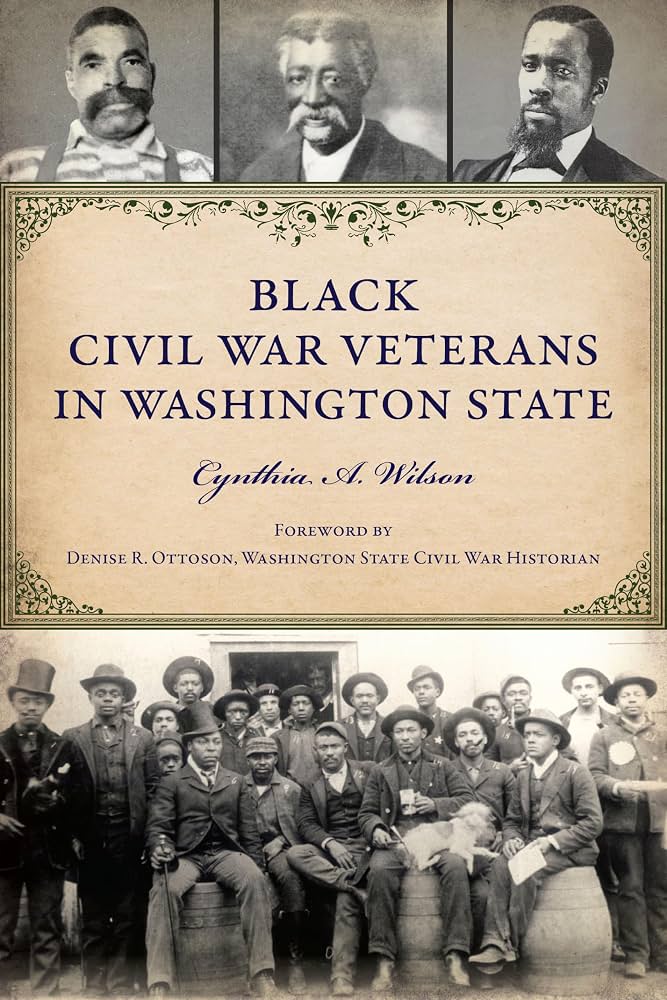 In the late 1800s, the new state of Washington promised peace and prosperity to new settlers. At least thirty-three African American men who had served during the Civil War answered the call. Paul Barrows, a former legislator from Mississippi, established the Calvary Baptist Church of Spokane. Gideon H. Stump Bailey became the first African American Justice of the Peace in Franklin. Allin Alfred Hawkins, born into slavery, became one of the wealthiest African American farmers in the Yakima Valley. Author Cynthia A. Wilson uncovers the stories of these courageous men. - Publisher's Description
Request this Title
The Wages of War: When America's Soldiers Came Home - From Valley Forge to Vietnam
Severo, Richard; Milford, Lewis (2016)
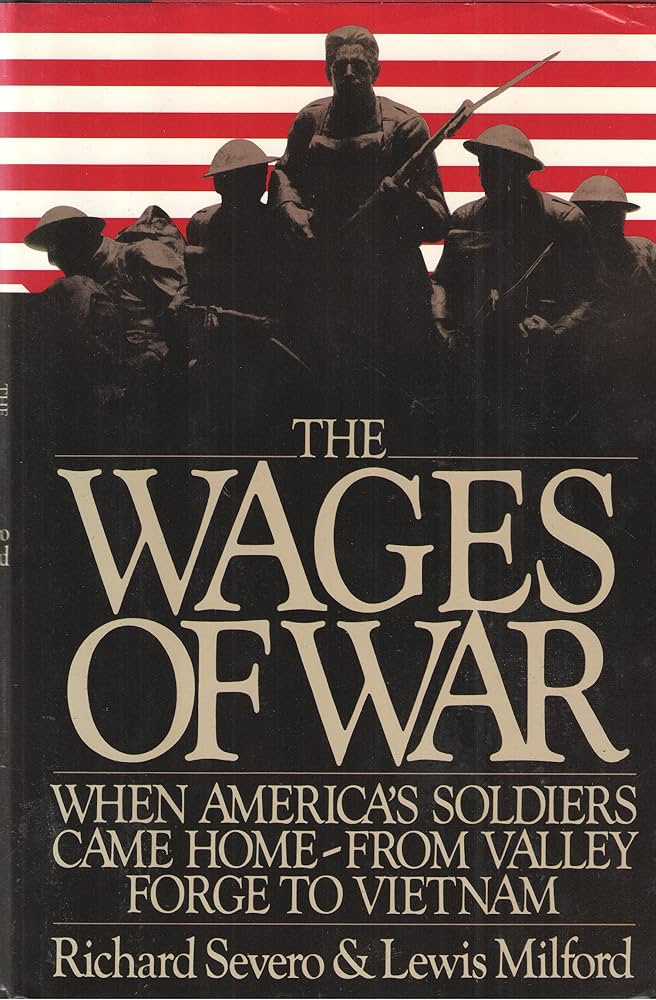 Time and time again, the sacrifices made by veterans and their families have been repaid with scorn, discrimination, lack of health services, scant financial compensation, and other indignities. This injustice dates back as far as the American Revolution, when troops came home penniless and without prospects for work, yet had to wait decades before the government paid them the wages they were owed. When soldiers returned from the Cuban campaign after the Spanish-American War, they were riddled with malaria, typhoid, yellow fever, and dysentery—but the government refused to acknowledge their illnesses, and finally dumped them in a makeshift tent city on Long Island, where they were left to starve and die.
Perhaps the most infamous case of disgraceful behavior toward veterans happened after the Vietnam War, when soldiers were forced to battle bureaucrats and lawyers, and suffer media slander, because they asked the government and chemical industry to help them cope with the toxic aftereffects of Agent Orange. In "The Wages of War," authors Richard Severo and Lewis Milford not only uncover new information about the controversial use of this defoliant in Vietnam and the subsequent class action suit brought against its manufacturers, but also present fresh information on every war in US history. The result is exhaustive proof that—save for the treatment of soldiers in the aftermath of World War II—the government’s behavior towards American servicemen has been more like that of “a slippery insurance company than a policy rooted in the idea of justice and fair reward.” - Publisher's Description
Request this Title
The New Praetorians: American Veterans, Society, and Service from Vietnam to the Forever War
Gambone, Michael (2021)
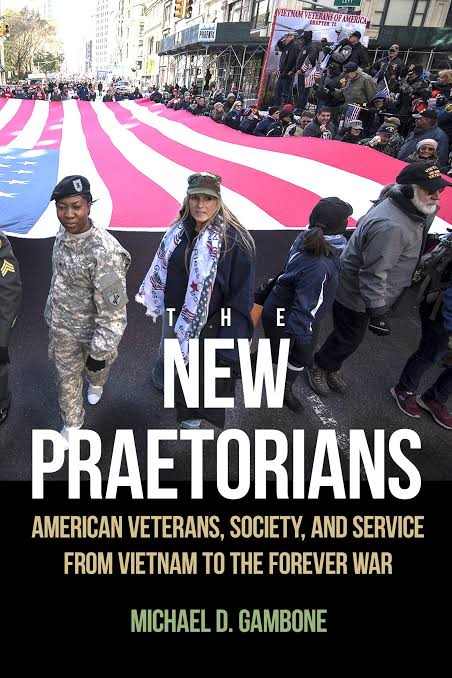 Contemporary veterans belong to an exclusive American group. Celebrated by most of the country, they are nevertheless often poorly understood by the same people who applaud their service. Following the introduction of an all-volunteer force after the war in Vietnam, only a tiny fraction of Americans now join the armed services, making the contemporary soldier, and the veteran by extension, increasingly less representative of mainstream society. Veterans have come to comprise their own distinct tribe―modern praetorians, permanently set apart from society by what they have seen and experienced.
In an engrossing narrative that considers the military, economic, political, and social developments affecting military service after Vietnam, Michael D. Gambone investigates how successive generations have intentionally shaped their identity as veterans. "The New Praetorians" also highlights the impact of their homecoming, the range of educational opportunities open to veterans, the health care challenges they face, and the unique experiences of minority and women veterans. This groundbreaking study illustrates an important and often neglected group that is key to our understanding of American social history and civil-military affairs. - Publisher's Description
Request this Title
Veteran Friendships Across Lifetimes: Brothers and Sisters in Arms
Ward, Jamie (2017)
 "Veteran Friendships across Lifetimes: Brothers and Sisters in Arms" seeks to add to the larger conversation about the “band of brothers” phenomenon by focusing on stories of survival after service members return home.
Based on five years of research, including in-depth interviews with fifty servicemen and women, this book explores the interrelationship between camaraderie and contentment. Ward specifically looks at how military friendships translate from the battlefield into civilian life and how these friendships assist soldiers in gaining peace with the past, happiness in the present, and hope for the future.
This text uses the themes of strength, kinship, and resilience to discuss the bonds and friendships that are created and maintained despite the savagery of the wartime experience. - Publisher's Description
Request this Title
Long Journeys Home: American Veterans of World War II, Korea, and Vietnam
Gambone, Michael (2017)
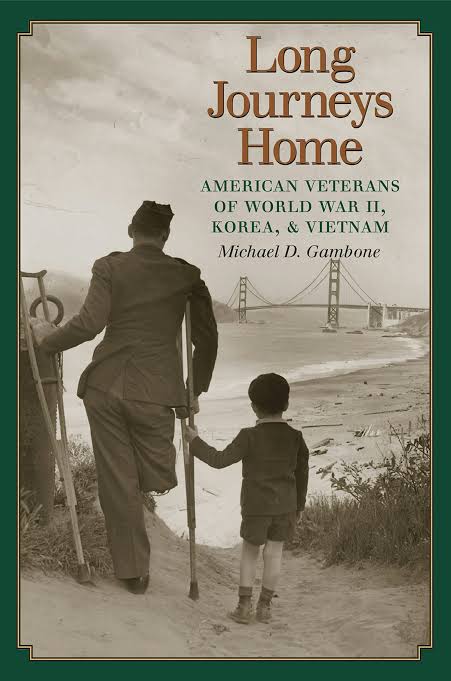 In the modern history of American veterans, it is sometimes difficult to separate myth from fact. The men and women who served in World War II are routinely praised as heroes; the “Greatest Generation,” after all, triumphed over fascism and successfully reentered postwar society. Veterans of the Vietnam War, on the other hand, occupy a different thread in the postwar narrative, sometimes as a threat to society but usually as victims of it; these vets returned home to a combination of disdain, fear, and prolonged suffering. And until very recently, both the public and historians have largely overlooked veterans of the Korean War altogether; the hit television show "M*A*S*H" was set in Korea but was more about Vietnam.
"Long Journeys Home" explores the veteran experience of World War II, Korea, and Vietnam. It examines and dissects the various myths that have grown up around each of these wars. Author Michael D. Gambone compares and contrasts the basic elements of each narrative, including the factors that influenced the decision to enlist, the impact of combat on life after the war, the struggles of postwar economic adjustment, and participation in (or withdrawal from) social and political activism.
Gambone does not treat these veterans monolithically but instead puts each era’s veterans in historical context. He also explores the nuances of race, gender, and class. Despite many differences, some obvious and some not, Gambone nonetheless finds a great deal of continuity, and ultimately concludes that Korean and Vietnam veterans have much more in common with the Greatest Generation than was previously understood. - Publisher's Description
Request this Title
Earning Their Wings: The WASPs of World War II and the Fight for Veteran Recognition
Myers, Sarah Parry (2023)
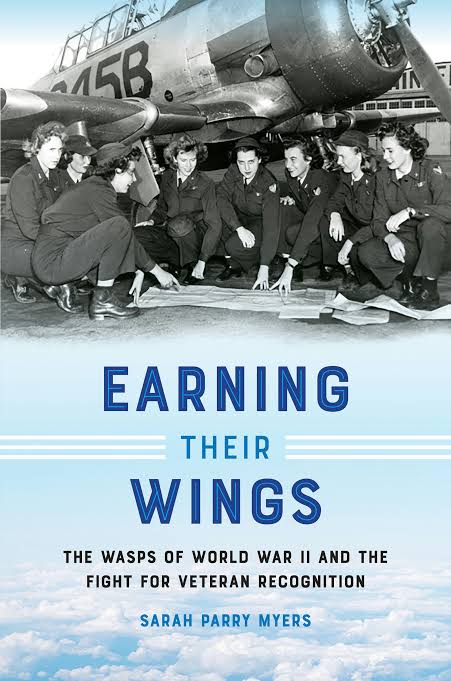 Established by the Army Air Force in 1943, the Women’s Airforce Service Pilots (WASP) program opened to civilian women with a pilot’s license who could afford to pay for their own transportation, training, and uniforms. Despite their highly developed skill set, rigorous training, and often dangerous work, the women of WASP were not granted military status until 1977, denied over three decades of Army Air Force benefits as well as the honor and respect given to male and female World War II veterans of other branches. Sarah Parry Myers not only offers a history of this short-lived program but considers its long-term consequences for the women who participated and subsequent generations of servicewomen and activists.
Myers shows us how those in the WASP program bonded through their training, living together in barracks, sharing the dangers of risky flights, and struggling to be recognized as military personnel, and the friendships they forged lasted well after the Army Air Force dissolved the program. Despite the WASP program’s short duration, its fliers formed activist networks and spent the next thirty years lobbying for recognition as veterans. Their efforts were finally recognized when President Jimmy Carter signed a bill into law granting WASP participants retroactive veteran status, entitling them to military benefits and burials. - Publisher's Description
Request this Title
Taking flight: The Nadine Ramsey Story
Ramsey, Raquel; Aurand, Tricia (2020)
 In October 1944 Nadine Ramsey was thirty-three and she was flying the cutting-edge P-51 Mustang to New Jersey, its last stop before heading to the war in Europe. The irrepressible young woman from Wichita had long been determined to fly and the gathering storm clouds of World War II had provided an unexpected opportunity. "Taking Flight" is the inspiring story of a girl from Depression-era Kansas who overcame tremendous challenges and defied convention to become an elite pilot—one of the few American women to fly fighter aircraft during World War II.
"Taking Flight" follows Nadine as she became one of 1,102 women to join the Women’s Airforce Service Pilots and one of only 303 WASPs to take to the skies in military cockpits, transporting aircraft to bases across the nation for use in the theaters of war. This book marks her milestones: the first Kansas woman to earn a commercial pilot license; among the earliest women to fly the US Air Mail; one of only 26 WASPs who flew the Lockheed P-38 Lightning, a fighter aircraft—and the first woman to own one; the only woman in the country to instruct male pilots to fly fighter planes after the war. Disbanded in late 1944 to make way for male pilots and barred from piloting for commercial airlines, the WASPs spent the next three decades fighting to win veteran status. "Taking Flight: The Nadine Ramsey Story" is a profile in courage of a woman who helped clear the flight path for today’s female combat and commercial aviators. - Publisher's Description
Request this Title
Hispanic Medal of Honor Recipients: American Heroes
Lanning, Michael Lee (2022)
 La Valentia, el valor, la bravura. Since the creation of the Medal of Honor by the United States Congress in 1861, sixty Americans of Hispanic heritage have been awarded the nation’s highest decoration for bravery and self-sacrifice in combat. In this important new work, Michael Lee Lanning documents what one reader describes as “some of the most extraordinary battlefield exploits ever performed in an American military uniform.”
Based on meticulous research, Lanning has assembled authoritative accounts of these heroic individuals and their deeds of valor, from the American Civil War through the current campaign in the Middle East. This clear and vigorous narrative—derived from enlistment records and other public documents, newspaper accounts, archival sources, and interviews with the families of the honorees—presents brief biographies that include details of the recipients’ lives before and—in the case of those who survived—after their active-duty service. Lanning also includes the text of the citation from each recipients’ Medal of Honor ceremonies and gripping accounts of the battlefield heroics that earned them the ultimate military honor from a grateful nation.
"Hispanic Medal of Honor Recipients: American Heroes" provides the most thorough documentation to date of these courageous Americans and their service to our nation. The work offers a fitting commemoration of their remarkable actions under the direst circumstances, often performed under conditions of discrimination and prejudice, providing inspiration and encouragement for years to come. - Publisher's Description
Request this Title
The Last Deployment: How a Gay, Hammer-swinging Twentysomething Survived a Year in Iraq
Lemer, Bronson (2011)
 In 2003, after serving five and a half years as a carpenter in a North Dakota National Guard engineer unit, Bronson Lemer was ready to leave the military behind. But six months short of completing his commitment to the army, Lemer was deployed on a yearlong tour of duty to Iraq. Leaving college life behind in the Midwest, he yearns for a lost love and quietly dreams of a future as an openly gay man outside the military. He discovers that his father’s lifelong example of silent strength has taught him much about being a man, and these lessons help him survive in a war zone and to conceal his sexuality, as he is required to do by the U.S. military.
"The Last Deployment" is a moving, provocative chronicle of one soldier’s struggle to reconcile military brotherhood with self-acceptance. Lemer captures the absurd nuances of a soldier’s daily life: growing a mustache to disguise his fear, wearing pantyhose to battle sand fleas, and exchanging barbs with Iraqis while driving through Baghdad. But most strikingly, he describes the poignant reality faced by gay servicemen and servicewomen, who must mask their identities while serving a country that disowns them. Often funny, sometimes anguished, The Last Deployment paints a deeply personal portrait of war in the twenty-first century. - Publisher's Description
Request this Title
Ask & Tell: Gay and Lesbian Veterans Speak Out
Estes, Steve (2007)
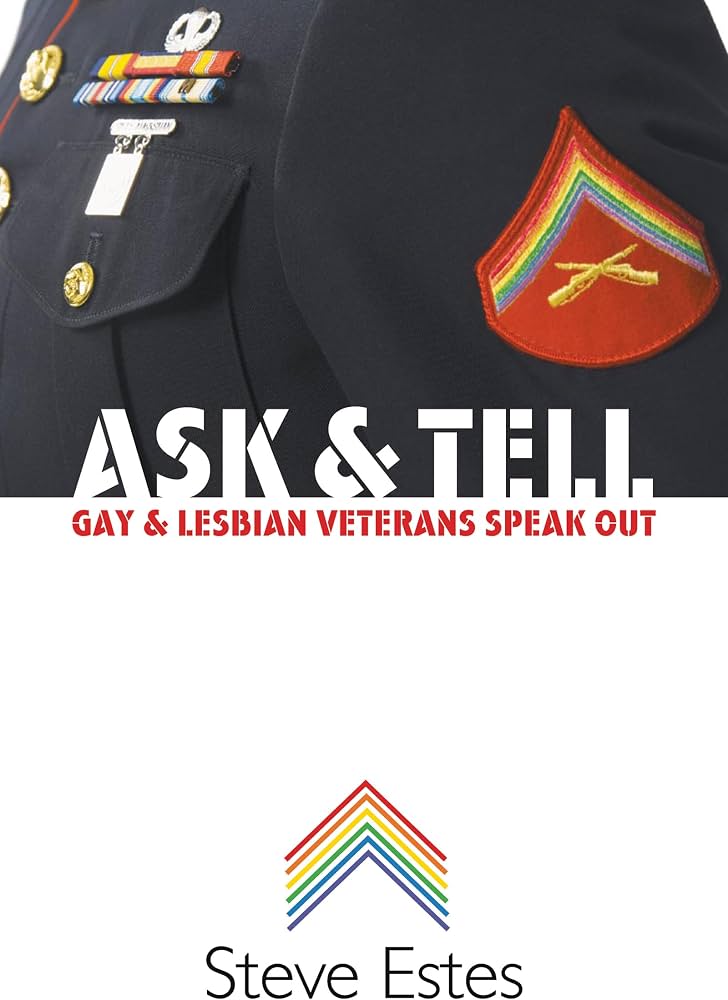 Don’t Ask, Don’t Tell was the directive of President Clinton’s 1993 military policy regarding gay and lesbian soldiers. This official silence continued a collective amnesia about the patriotic service and courageous sacrifices of homosexual troops. "Ask and Tell" recovers these lost voices, offering a rich chronicle of the history of gay and lesbian service in the U.S. military from World War II to the Iraq War.
Drawing on more than 50 interviews with gay and lesbian veterans, Steve Estes charts the evolution of policy toward homosexuals in the military over the past 65 years, uncovering the ways that silence about sexuality and military service has affected the identities of gay veterans. These veteran voices — harrowing, heroic, and on the record — reveal the extraordinary stories of ordinary Americans, men and women who simply did their duty and served their country in the face of homophobia, prejudice, and enemy fire. Far from undermining national security, unit cohesion, or troop morale, Estes demonstrates, these veterans strengthened the U.S. military in times of war and peace. He also examines challenges to the ban on homosexual service, placing them in the context of the wider movement for gay rights and gay liberation. Ask and Tell is an important compilation of unheard voices, offering Americans a new understanding of the value of all the men and women who serve and protect them. - Publisher's Description
Request this Title
"I'm Not Gonna Die in This Damn Place": Manliness, Identity, and Survival of the Mexican American Vietnam Prisoners of War
Coronado, Juan David (2018)
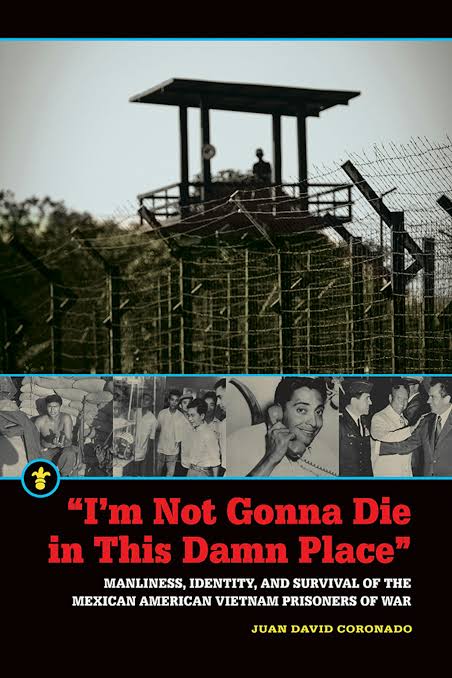 By the time of the Vietnam War era, the “Mexican American Generation” had made tremendous progress both socially and politically. However, the number of Mexican Americans in comparison to the number of white prisoners of war (POWs) illustrated the significant discrimination and inequality the Chicano population faced in both military and civilian landscapes. Chicanos were disproportionately “grunts” (infantry), who were more likely to be killed when captured, while pilots and officers were more likely to be both white and held as POWs for negotiating purposes.
A fascinating look at the Vietnam War era from a Chicano perspective, “I’m Not Gonna Die in this Damn Place” gives voice to the Mexican American POWs. The stories of these men and their families provide insights to the Chicano Vietnam War experience, while also adding tremendously to the American POW story. This book is an important read for academics and military enthusiasts alike. - Publisher's Description
Request this Title
They Have Left Us Here to Die: The Civil War Prison Diary of Sgt. Lyle Adair, 111th U.S. Colored Infantry
Adair, Lyle (2011)
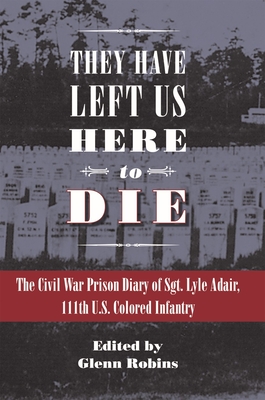 Besides the risks of death or wounding in combat, the average Civil War soldier faced the constant threat of being captured by the enemy. It is estimated that one out of every seven soldiers was taken captive—more than 194,000 of them from Union regiments—and held in prison camps infamous for breeding disease and death.
Sgt. Lyle G. Adair of the 111th United States Colored Troops joined the thousands of Union prisoners when part of his regiment tasked with guarding the rail lines between Tennessee and northern Alabama was captured by Confederate cavalrymen. Adair, who had first enlisted in the 81st Ohio Volunteer Infantry at the age of seventeen and later became a recruiting agent in the 111th, spent the remainder of the war being shuffled from camp to camp as a prisoner of war. By the war’s end, he had been incarcerated in five different Confederate camps: Cahaba, Camp Lawton, Blackshear, Thomasville, and Andersonville.
“They Have Left Us Here to Die” is an edited and annotated version of the diary Sergeant Adair kept of his seven months as a prisoner of war. The diary provides vivid descriptions of each of the five camps as well as insightful observations about the culture of captivity. Adair notes with disdain the decision of some Union prisoners to take the oath of allegiance to the Confederacy in exchange for their freedom and covers the mock presidential election of 1864 held at Camp Lawton, where he and his fellow inmates were forced to cast votes for either Lincoln or McClellan. But most significantly, Adair reflects on the breakdown of the prisoner exchange system between the North and South, especially the roles played by the Lincoln administration and the Northern home front. As a white soldier serving with African Americans, Adair also makes revealing observations about the influence of race on the experience of captivity. - Publisher's Description
Request this Title
Mrs. Cordie's Soldier Son: A World War II Saga
Miracle, Rocky (2008)
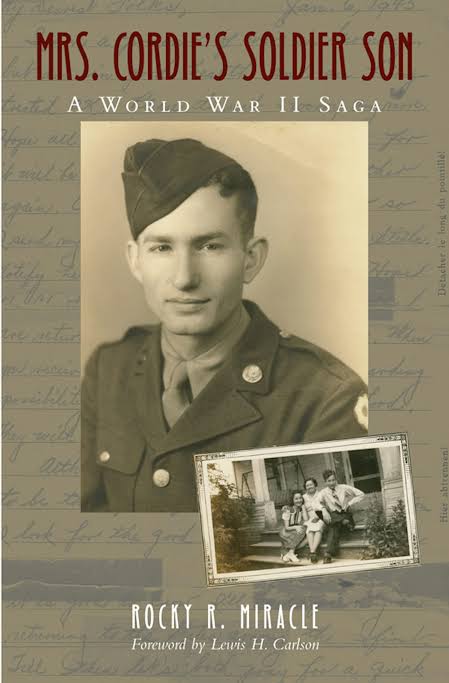 The story of D.C. Caughran Jr., Mrs. Cordie’s son, could be that of almost any soldier in World War II. He left the comfort of home and family to become part of one of the defining conflicts of modern times. The letters he wrote home tell his story from the day he received his draft notice in the summer of 1942 through battle, capture, wounding, imprisonment, and his eventual return home for recuperation and discharge.
Author Rocky R. Miracle, the son-in-law of D.C. Caughran, tells not only Caughran’s story, but at the same time the story of “the home folks” who anxiously watched for letters from their “soldier boy” and wrote faithfully of their love and prayers for his safety. This home-front narrative also stands as an important and deeply personal record of life in wartime.
Taken prisoner during the German breakout of December 1944 that led to the Battle of the Bulge, D.C. was force-marched past corpses lining the road into Germany, loaded with other American prisoners into boxcars, and held in a prison camp during the coldest European winter of the century. He suffered starvation rations and hepatitis and was hospitalized after his liberation, though doctors were doubtful that he would recover. However, with time and care, he returned to health, was honorably discharged from the U.S. Army, and lived a long, productive life.
This intimate portrait of an American family—at home and at war—during a time of world upheaval is at once heartwarming, sobering, and entertaining. "Mrs. Cordie’s Soldier Son" is highly recommended for readers interested in World War II, the POW experience, and home-front literature. - Publisher's Description
Request this Title
The Comanche Code Talkers of World War II
Meadows, William (2002)
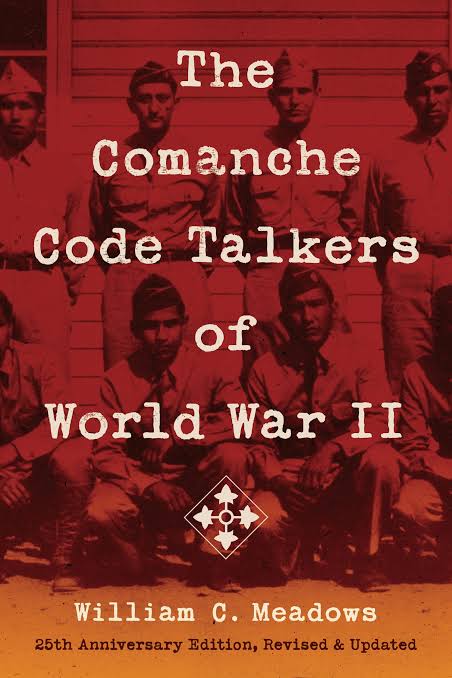 Among the Allied troops who came ashore in Normandy on D-Day were thirteen Comanches in the 4th Infantry Division’s 4th Signal Company. Under German fire they laid communications lines and sent messages in a form never before heard in Europe: coded Comanche. For the rest of World War II, the Comanche Code Talkers played a vital role transmitting orders in a code the Germans never broke.
Drawing on interviews with surviving members of the unit, their training officer, and fellow soldiers, as well as archival records, William C. Meadows traces the Comanche Code Talkers from recruitment and training through wartime service and into their postwar lives. He also places their story within the broader history of Native American code talking in the world wars, comparing the Comanche program with the better-known Navajo Code Talkers and examining the military’s use of Native languages for secure communication. - Publisher's Description
Request this Title
A More Unbending Battle: The Harlem Hellfighters' Struggle for Freedom in WWI and Equality at Home
Nelson, Peter (2009)
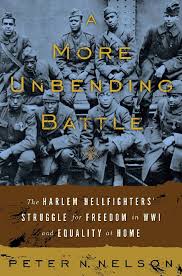 The night broke open in a storm of explosions and fire. The sound of shells whizzing overhead, screeching through the night like wounded pheasants, was terrifying. When the shells exploded prematurely overhead, a rain of shrapnel fell on the men below -- better than when the shells exploded in the trenches . . .
In "A More Unbending Battle," journalist and author Pete Nelson chronicles the little-known story of the 369th Infantry Regiment -- the first African-American regiment mustered to fight in WWI. Recruited from all walks of Harlem life, the regiment had to fight alongside the French because America's segregation policy prohibited them from fighting with white U.S. soldiers.
Despite extraordinary odds and racism, the 369th became one of the most successful -- and infamous -- regiments of the war. The Harlem Hellfighters, as their enemies named them, spent longer than any other American unit in combat, were the first Allied unit to reach the Rhine, and showed extraordinary valor on the battlefield, with many soldiers winning the Croix de Guerre and the Legion of Honor. Replete with vivid accounts of battlefield heroics, "A More Unbending Battle" is the thrilling story of the dauntless Harlem Hellfighters. - Publisher's Description
Request this Title
War Flower: My Life after Iraq
King, Brooke (2019)
 Brooke King has been asked over and over what it’s like to be a woman in combat, but she knows her answer is not what the public wants to hear. The answers people seek lie in the graphic details of war—the sex, death, violence, and reality of it all as she experienced it. In her riveting memoir "War Flower," King breaks her silence and reveals the truth about her experience as a soldier in Iraq. Find out what happens when the sex turns into secret affairs, the violence is turned up to eleven, and how King’s feelings for a country she knew nothing about as a nineteen-year-old become more disturbing to her as a thirty-year-old mother writing it all down before her memories fade into oblivion.
The story of a girl who went to war and returned home a woman, "War Flower" gathers the enduring remembrances of a soldier coming to grips with post-traumatic stress disorder. As King recalls her time in Iraq, she reflects on what violence does to a woman and how the psychic wounds of combat are unwittingly passed down from mother to children. "War Flower" is ultimately a profound meditation on what it means to have been a woman in a war zone and an unsettling exposé on war and its lingering aftershocks. For veterans such as King, the toughest lesson of service is that in the mind, some wars never end—even after you come home. - Publisher's Description
Request this Title
World War II Dispatches to Madison: Letters Home from an Army Air Corps Soldier
Gay, Dannelle (2024)
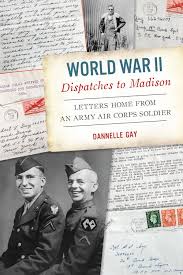 An Army Air Corps serviceman from a prominent Madison family, Bob Gay paints a vivid picture of a young man's journey through a tumultuous era, revealing the profound love he held for his family.
As Gay fulfills his duty on the frontlines, his mother's unwavering support shines through her involvement with the Red Cross, while his father's dedication as a ration board member and air raid warden mirrors a nation's collective sacrifice.
"World War II Dispatches to Madison" is a tribute to a humble and kind soul who never sought the spotlight.
In honor of her ancestor Robert Gay, Dannelle’s book will benefit the Wounded Warrior Project. - Publisher's Description
Request this Title