
Renovated center expands access to CMU’s Special Collections for teaching, research and public engagement
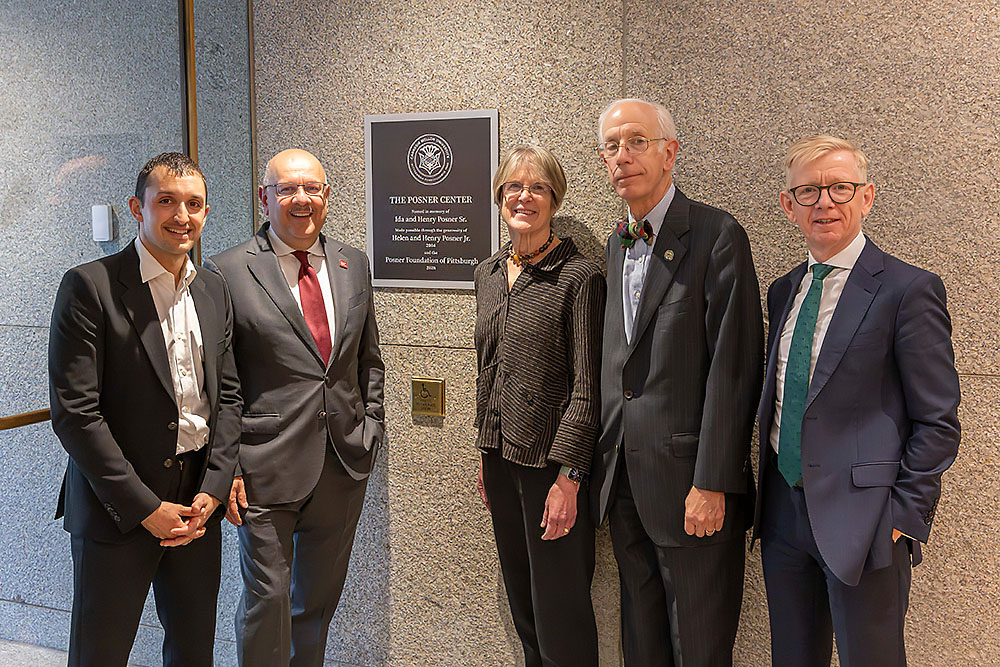
From left to right: Curator of Special Collections Sam Lemley, President Farnam Jahanian, Anne Molloy, Henry Posner III, and Helen and Henry Posner, Jr. Dean of the University Libraries Keith Webster
Carnegie Mellon University leaders, members of the Posner family and representatives from across the university community gathered at the Posner Center for Special Collections on Tuesday, Oct. 27, to formally rededicate the newly renovated facility and celebrate 50 years of partnership between the Posner family and the University Libraries.
The ceremony reflected on the history of the Posner Memorial Collection while highlighting the possibilities created by the transformed center, which reopened in December 2025 as a dedicated home for CMU’s Special Collections.
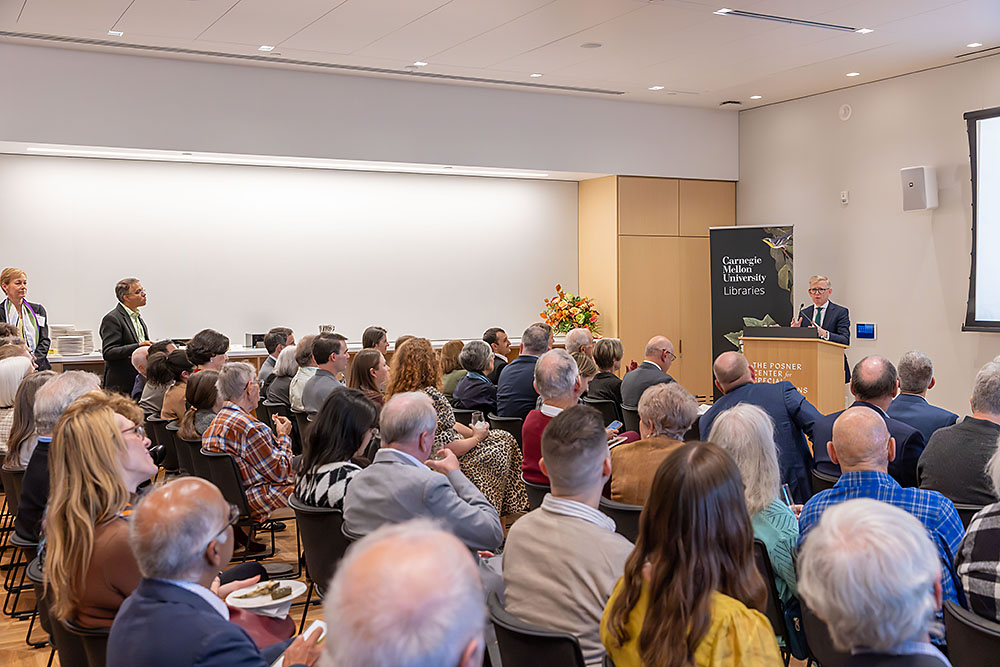
“For 50 years, the Posner family has entrusted us with something rare: not simply a collection of books and artifacts, but a record of the evolution of human thought, of human curiosity,” said Helen and Henry Posner Jr. Dean of the University Libraries Keith Webster. “What began with the deposit of the Posner Memorial Collection in 1976 has grown into an extraordinary intergenerational partnership.”
Collected over five decades by Pittsburgh entrepreneur Henry Posner Sr., the Posner Memorial Collection brings together landmark works in the history of science, technology and literature. Following his death in 1976, the family considered dividing the collection among his four sons, CMU and Posner Foundation of Pittsburgh Trustee Anne Molloy explained during the ceremony. Instead, they chose to preserve it intact and share it with others.
When the family visited Carnegie Mellon, they met rare books librarian Ann Skoog, whose interest in the collection helped establish a lasting relationship. “In the end, that connection, that enthusiasm, is really what sealed the deal for the collection to come here to Carnegie Mellon,” Molloy said.
Henry Posner III recalled that, as a teenager surrounded by his grandfather's books, he had little appreciation for their historical significance.
“It never occurred to me, the significance of this collection,” he said. “I would guess that my grandfather himself probably did not appreciate how fabulous his collection was and the impact it would have.”
The Posner Center first opened in 2004 as a gift from Helen and Henry Posner Jr. in memory of Henry Posner Sr. and his wife, Ida. Two decades later, an $8 million commitment from the Posner Foundation of Pittsburgh provided $6 million to renovate the building and $2 million to support the care, display and use of the Libraries’ Special Collections.
Designed by Perkins Eastman architects, the renovated 11,400-square-foot center includes a public exhibition gallery, a silent reading room, a flexible classroom and event space, expanded secure storage and a new Digitization Lab equipped with a state-of-the-art scanner.
The renovation also reflects a broader investment in humanities scholarship at Carnegie Mellon.
“We're also pleased to see this investment in the humanities on campus at a time when humanities is under pressure at many institutions,” Molloy said. “CMU is re-envisioning the humanities for the era in which we are living. And I'm thrilled, and we're all thrilled, that the Posner Center is part of that.”
Carnegie Mellon President Farnam Jahanian formally rededicated the center, recognizing the Posner family's enduring contributions to the university.
“May this beautiful space continue to inspire curiosity, spark discovery and connect the treasures of our past with the possibilities of the future,” Jahanian said.
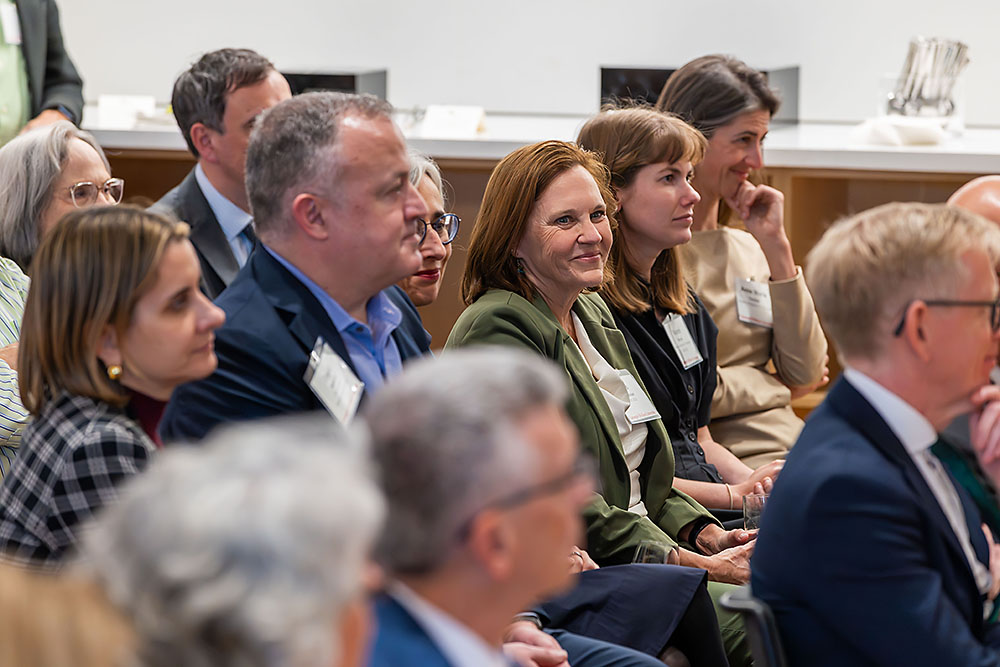
Since reopening in December, the center has welcomed more than 9,000 visitors, including more than 1,000 students participating in classes. The number of courses hosted by Special Collections has increased fivefold, spanning subjects from history and music to architecture and computer science.
Students studying classic children's literature have handled historic editions of works by Lewis Carroll, Hans Christian Andersen and Jacob Grimm, while a University of Pittsburgh class explored historical efforts to automate writing through objects including Enigma machines and mechanical calculators.
Students in Associate Professor of History Scott Sandage's “U.S. Constitution and the Presidency” course visited the center multiple times to learn from constitutional scholar Ken Gormley, examine one of only five extant copies of a rare printing of the U.S. Bill of Rights and hold their own “Constitutional Convention” in the flexible classroom.
The center is also supporting new forms of research and creative practice. During the summer, inaugural Posner Fellow for Creative Practice Leslie Liu, who graduated from the College of Fine Arts in 2026, drew inspiration from historical books, calculators and ciphers as she designed experimental reading tools, including a contemporary reinterpretation of the medieval girdle book.
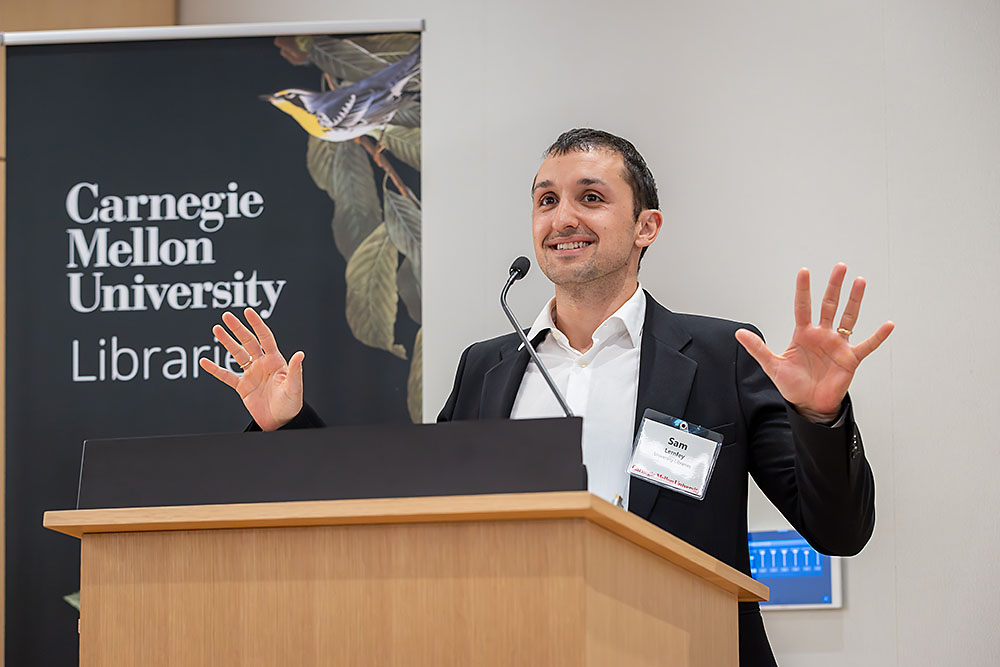
Curator of Special Collections and Posner Center Director Sam Lemley described the renewed facility as a “humanistic laboratory” where students, researchers and members of the public can encounter and handle rare materials and discover unexpected connections.
“I want this building to be an invitation, to make Special Collections feel less like a world apart, and more like an integral and vibrant piece of intellectual life at Carnegie Mellon,” Lemley said. “This may be the most consequential legacy of this renovation: not simply a transformed building, but a transformed and unapologetically public-facing vision for Special Collections. This new space opens up new possibilities for what a Special Collections library can be.”
by Sarah Bender