Researchers today have access to more information than ever before. At the same time, artificial intelligence, open science practices, and new discovery tools are changing how research is conducted, shared, and evaluated.
For students, keeping up with these changes can be challenging. While they are often expected to find, organize, and assess scholarly literature, many of the skills that support effective research are learned informally through experience rather than taught directly in the classroom.
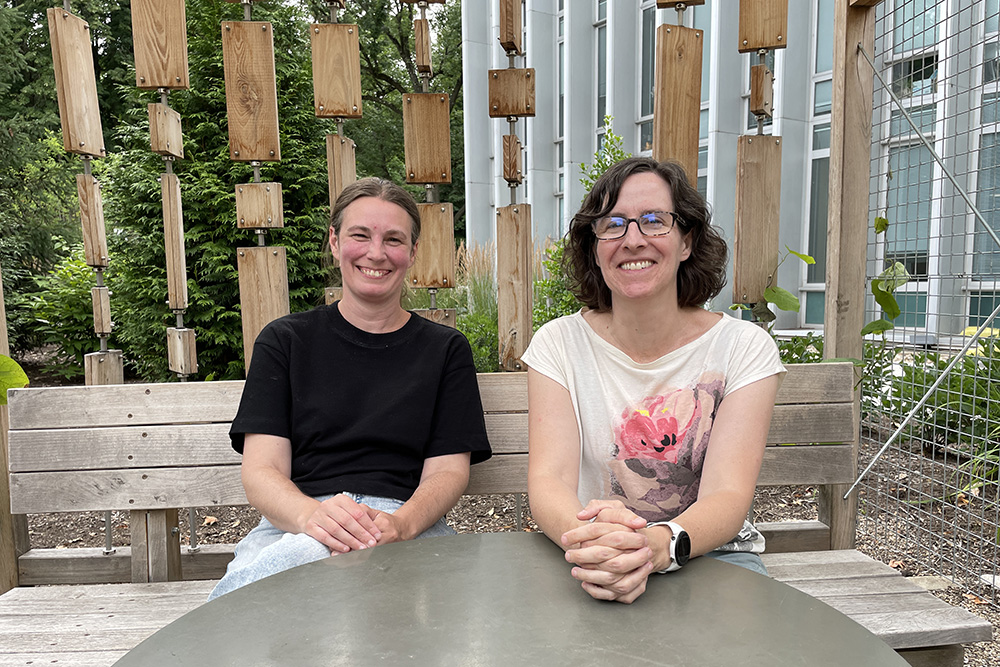
Social Sciences Librarian and Evidence Synthesis Program Director Sarah Young and STEM Librarian and Open Science Program Director Melanie Gainey saw an opportunity to help students build those skills. Drawing on their experience supporting researchers across Carnegie Mellon, they developed a mini course that explores both the fundamentals of research and the technologies reshaping it.
“A lot of the processes used in traditional research have been in place for decades,” Gainey explained. “But now, we’re on the cusp of a lot of change when it comes to how research works and how it’s disseminated. By taking a step back and looking at the research process as a whole, we can find a way forward that is open, accessible, and responsible.”
First piloted at Carnegie Mellon University in Qatar in 2024, the course evolved into "Doing Modern Research: AI, Open Science & Navigating the New Research Landscape," a seven-week mini course that helps undergraduate students think critically about how they discover, evaluate, and contribute to scholarly knowledge.
Goal
- Help students build foundational research skills that are often learned informally.
- Introduce students to emerging research tools and practices, including AI-powered discovery tools and open science.
- Encourage students to think critically about how information is created, published, and shared.
How We Helped
- Over seven weeks, Gainey and Young were able to spend time introducing topics like literature searching, citation management, AI literacy, and open science principles, while tailoring discussions to students from a range of disciplines and levels of research experience.
- The final project gave students a chance to examine how AI is transforming the way researchers search for information, while also evaluating how AI impacts their own fields. A biology student researched regulating AI use in gene editing & gene therapy, while a math student looked at the role of AI in pre-college education. Another student, from the Tepper School of Business, explored AI in supply chain management applications.
Results
- Students practiced identifying what to be wary of when using AI tools, what those tools can and can’t do, and when more traditional research methods might be appropriate. For one assignment, they compared their own deep reading to an AI summary.
- Students also gained an understanding of the publishing process and how people in real world situations interact with scholarly literature. “Research seems a little less scary than before I took this class. I really enjoyed learning about the publishing process and how this impacts research decisions,” reported a sophomore from Dietrich College of Humanities and Social Sciences.
- Participants applied course concepts and tools to other classes and research projects over the course of the semester. “I learned to use and implement new tools into my own research and findings. These tools really took my research process to the next level,” said a sophomore from the Mellon College of Science.
- Following successful offerings in Qatar and Pittsburgh, Young and Gainey plan to teach the course again in spring 2027.